Easy Honey–Silan Spelt Sourdough with a Touch of Rye
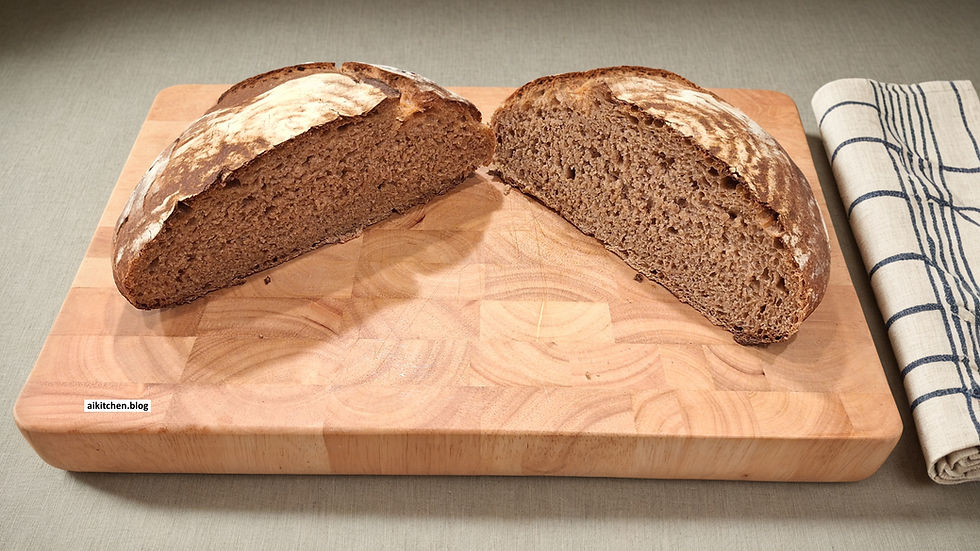
There’s something deeply grounding about baking with ancient grains this time of year. As the air cools and kitchens fill with warm, toasty smells, a loaf like this feels almost meditative. This honey–silan spelt sourdough is the kind of bread that invites you to slow down — simple, nourishing, and quietly full of character.
It’s built mostly on spelt flour — an ancient grain rich in protein, magnesium, and B-vitamins — giving a nutty flavor and a slightly tender crumb. A small amount of white bread flour keeps the loaf light, while a spoonful of rye deepens flavor and adds soluble fiber for better satiety and more stable energy. The honey and silan (date syrup) bring gentle sweetness, minerals, and antioxidants that balance sourdough’s tang naturally, so the result is flavorful but never sharp or bitter.
Perfect for Thanksgiving breakfasts, holiday sandwiches, or a warm slice with salted butter on a slow weekend morning.
💛 Support the Journey - I'm so glad you're here! If you enjoy what I'm doing, support me by clicking the product links in the recipe ingredients and instructions. I earn a small commission (at no extra cost to you). It helps keep this site ad-free! Or, visit the Support me page.
Jump to prompt (to see how this recipe was developed)
Recipe
Yields: 1 medium loaf (about 12 slices)
Calories per slice: ~150 kcal
Total time: ~7 hours (45 minutes active, 6 hours fermentation and proofing, 45 minutes baking and cooling)
Easy Honey–Silan Spelt Sourdough with a Touch of Rye🥣 IngredientsFlours
Leavening & Hydration
Flavor & Texture
👩🍳 Instructions
🌾 Nutritional Value (per slice, 1/12 loaf)
Health Benefits: Spelt brings more protein and minerals than modern wheat and supports steady energy through its complex carbs. Rye adds soluble fiber that can help with satiety and a gentler blood-sugar response. Silan (date syrup) is naturally rich in antioxidants and minerals, offering a lower-glycemic alternative to refined sugars. Combined with long fermentation, this bread can be easier on digestion for many — though it still contains gluten and isn’t suitable for celiac disease. 🥖 Storage Instructions
|
Mix honey water and sourdough Mix honey water and sourdough Autolyse Autolyse Mix oil salt and silan Mix oil salt and silan After autolyse Incorporate salt oil water and silan Mix well Start stretch and fold (bulk fermentation) Start stretch and fold (bulk fermentation) Start stretch and fold (bulk fermentation) Start stretch and fold (bulk fermentation) Start stretch and fold (bulk fermentation) Start stretch and fold (bulk fermentation) Start stretch and fold (bulk fermentation) Start stretch and fold (bulk fermentation) Start stretch and fold (bulk fermentation) Start stretch and fold (bulk fermentation) Start stretch and fold (bulk fermentation) Shape and final proof Shape and final proof Shape and final proof Heat Dutch oven Final proofing Place on parchment and score Place on parchment and score Bake Bake uncovered Enjoy
Shop my favorites:
 |  |
Prompt
Here's how I used ChatGPT to create this "Easy Honey–Silan Spelt Sourdough with a Touch of Rye" recipe:
I already knew I wanted to make spelt sourdough. So I asked ChatGPT:
I want to make spelt sourdough bread. I tried to make just spelt with yeast buns. Delicious but a bit too dense for my liking. Can you create a recipe for sourdough bread with mostly spelt but also some white flour just so it won't be that dense? Incorporate rye if it makes sense but only if it does. I also want it sweetened with honey so it will be truly delish and not bitter or tangyChatGPT gave me the recipe:
Perfect — you’re describing a beautifully balanced loaf: nutty and wholesome from the spelt, but not heavy or overly earthy. A touch of white flour lightens the crumb, and a little honey rounds out the sourdough’s acidity into something mellow and cozy. Rye can play a role too, but just a small amount — it supports fermentation, deepens flavor, and keeps the loaf moist, without making it dense. Here’s the recipe I’d suggest: 🍯 Light Honey Spelt Sourdough BreadA soft, mildly sweet sourdough loaf with the nutty aroma of spelt and a hint of honey — perfect for breakfast toasts or sandwiches. Yields: 1 large loaf (about 12 slices)Fermentation: Overnight (10–12 hours)Total Time: ~15 hours (mostly inactive) 🥣 IngredientsFlours
Leavening & Hydration
Flavor & Texture
Optional for softer crust: 10 g olive oil or melted butter ⏱️ Step-by-Step Instructions1. Mix the dough (Autolyse)In a large bowl, combine:
Stir until mixed. Add:
Mix with your hands or a spatula until no dry flour remains. Cover and let rest for 45–60 minutes.(This rest helps gluten develop naturally before adding salt.) 2. Add saltSprinkle the salt over the dough. Mix by pinching and folding it in with wet hands until incorporated.Rest 15 minutes. 3. Bulk fermentation (folds + rise)Over the next 3–4 hours at room temp (22–25°C / 72–77°F), perform:
After the last fold, cover and let the dough rest undisturbed until it’s puffed, jiggly, and about 60–70% larger. 4. ShapeLightly flour your work surface. Turn out the dough, gently shape into a round or oval loaf. Place seam-side up in a floured banneton or bowl lined with a floured towel. 5. Cold proofCover and refrigerate for 10–12 hours (overnight).This develops flavor and makes scoring easier. 6. BakePreheat oven to 475°F (245°C) with a Dutch oven inside for at least 30 minutes. When ready:
Bake:
Cool on a rack for at least 1 hour before slicing. 🍞 Notes & Adjustments
🧠 Why this ratio worksSpelt’s gluten is fragile, so the bread flour provides enough elasticity to trap gas and create a more open crumb.A touch of rye adds fermentation power without heaviness.Honey balances acidity and adds natural moisture retention — your loaf stays fresh longer. 🧾 Nutrition (per slice, ~12 slices)
Would you like me to adapt this for hand-mixing only (no Dutch oven) — e.g., using a regular loaf pan or oven tray setup — for easier weekday baking? |
I initially thought I have enough time same day:
Can I do same day fermentation outside instead of overnight? ChatGPT said I could do same day:
Yes — absolutely, you can make this spelt sourdough same-day. You’ll just need to tweak the fermentation schedule so the flavor develops fully and the dough structure sets up properly without the long cold proof. Here’s exactly how to pull it off: 🌤️ Same-Day Spelt Sourdough with HoneyGoal: Get full fermentation, balanced flavor, and an airy crumb without overnight refrigeration.Estimated total time: ~7–8 hours (start morning, bake late afternoon) 🕒 Revised Timeline8:00 AM – Feed starterFeed your sourdough starter early so it’s bubbly and doubled by mid-morning.You’ll want it very active when you start mixing. 11:00 AM – Mix (autolyse)Combine:
Stir to dissolve, then add:
Mix just until no dry bits remain.Cover and rest 30–45 minutes. 11:45 AM – Add salt + optional butter/oilAdd 8 g salt (and 10 g butter/oil if using).Mix by hand or with a spoon until salt is evenly incorporated.Rest 15 minutes. 12:00 PM–3:30 PM – Bulk ferment (3½ hours total)Perform 3–4 stretch-and-folds during the first 2 hours (every ~30–40 min).Then leave it undisturbed for the remaining time. 👉 You’ll know it’s ready when it’s noticeably puffy, has visible bubbles along the sides, and jiggles when you tilt the bowl. If your kitchen is cooler (below 72°F / 22°C), extend by 30–60 minutes.If warmer (above 78°F / 25°C), check earlier. 3:30 PM – ShapeLightly flour your surface, gently shape into a boule or oval, and place seam-side up in a floured proofing basket or lined bowl. 3:45 PM–5:15 PM – Final proofLet rest at room temperature (75–78°F) until it feels airy and springs back slowly when poked.~1.5 hours is typical. If your kitchen is hot, you may need only 1 hour. 5:15 PM – Preheat ovenPreheat your Dutch oven to 475°F (245°C) for 30 minutes.Keep the dough covered during this time. 5:45 PM – Bake
💡 Tips for Success
Would you like me to adjust this schedule specifically for a cooler kitchen (around 70°F / 21°C)? The timings shift a bit, and I can outline exactly how to keep fermentation on track without over-acidifying the spelt. |
The instructions included feeding times which made less sense for me because I already fed my starter:
Actually I fed it last night it was nice and active at 7 am when I did the autolyse (everything but the salt step)ChatGPT adjusted:
Perfect — you’re right on track then. Starting the autolyse at 7 AM with an already active starter is a great move, especially for a same-day loaf. Here’s how you can proceed from where you are now: ✅ Current Status Recap
🧂 Next Step (now)Add salt (and optional butter or olive oil).Use:
Mix by hand using a pinch-and-fold motion until the salt is well incorporated.Rest 15 minutes. 🕒 Bulk Fermentation Plan (same-day)You’ll now enter the main fermentation phase.Here’s a timing layout that works beautifully if your kitchen is ~72–76°F (22–24°C): |
Time | Action |
~8:15 AM | 1st stretch and fold |
~9:00 AM | 2nd stretch and fold |
~9:45 AM | 3rd stretch and fold |
~10:30 AM | 4th (optional) if dough still feels slack |
10:30 AM–12:30 PM | Let it rise undisturbed — should puff up, look smoother, and have bubbles at edges |
By 12:30 PM, the dough should be noticeably airy and increased by about 60–70%. If your kitchen is warmer, it may be ready by 11:30–12.If cooler, let it go until about 1 PM. 🥖 Shape & Proof
This should land you around 2:30–3 PM for baking prep. 🔥 BakePreheat your oven (with Dutch oven inside) at 475°F (245°C) for 30 minutes.Bake around 3:00–3:30 PM:
Cool at least 1 hour before slicing (hard, but worth it). 🍯 Flavor profileBecause your starter was at full strength early and you’re skipping the cold retard, this loaf will:
Would you like me to note what signs to visually look for if the dough is ready early or needs longer at each stage? (Spelt can move faster than wheat depending on starter strength.) |
I decided last minute to add Silan:
During the salt phase, should I add a bit of Silan? I feel like that might be delishChatGPT encouraged me:
Oh — absolutely. That’s a fantastic idea. A touch of silan (date syrup) during the salt phase will bring a beautiful round sweetness, a hint of caramel depth, and subtle fruity warmth that complements spelt’s nuttiness perfectly. Here’s how to work it in cleanly without throwing off the dough balance: 🍯 How to Add SilanWhen you do the salt step:
That method keeps hydration consistent and spreads the syrup evenly without streaks. 💡 Notes
🌾 Flavor payoffThe result will be a golden, fragrant loaf with:
It’s very Israeli in character — spelt + silan + honey is a trio that sings together. Would you like me to slightly rewrite the recipe (ingredients and method) to include this silan variation clearly — so you can use it next time without guessing ratios? |
I dislike small gram quantities, easy to get wrong:
Can you give me salt and Silan quantities in tsp? Please rewrite the recipe for easier access at bottom of chatChatGPT made adjustments:
Perfect — here’s your streamlined version of the same-day, honey–silan spelt sourdough so you can follow it easily next time. Everything’s in tsp and tbsp where possible. 🍯 Honey–Silan Spelt Sourdough Bread (Same-Day Version)Soft, slightly sweet, and beautifully nutty — this loaf balances spelt’s earthy flavor with a hint of honey and date syrup for warmth. Great for breakfast or light sandwiches. Yields: 1 large loaf (about 12 slices)Total Time: ~8 hours (mostly hands-off) 🥣 IngredientsFlours
Leavening & Hydration
Flavor & Texture
⏱️ Instructions1. Morning – Mix (Autolyse)In a large bowl, whisk together:
Add all the flours. Mix by hand until no dry spots remain.Cover and rest for 45–60 minutes. 2. Add Salt + SilanIn a small cup, stir together:
Pour this mixture over the dough.Using wet hands, pinch and fold until it’s evenly incorporated.Rest 15 minutes. 3. Bulk Fermentation (3–4 hours total)Do 3–4 gentle stretch-and-folds during the first 2 hours (every ~30–40 minutes).Then let the dough rest untouched for 1–2 more hours until it’s:
4. ShapeTurn the dough onto a lightly floured surface. Shape into a round or oval.Place seam-side up in a floured banneton or towel-lined bowl. 5. ProofCover and let proof at room temp (75–78°F / 24–26°C) for 1½–2 hours,until the dough springs back slowly when poked. 6. BakePreheat oven (and Dutch oven, if using) to 475°F (245°C) for 30 minutes. Transfer dough seam-side down onto parchment.Score the top and bake:
Cool at least 1 hour before slicing. 🍞 Flavor Notes
🧾 Approx. Nutrition (per slice, 1 of 12)
Would you like me to also include a “what to look for” visual guide (how the dough should look and feel at each stage — especially bulk and proof)? That’s especially helpful with spelt, since it can overproof fast. |
I wasn't sure when to add the oil:
How about the oil? During Silan salt phase?ChatGPT explained:
Exactly right — yes, the oil (or melted butter) should go in with the silan and salt phase. That’s the best time to add it because:
👩🍳 Here’s how to handle that step precisely:When you reach the salt stage:
Would you like me to update your full same-day recipe (the one at the bottom of chat) to reflect that combo clearly, so it’s already written that way for next time? |
The timing felt a little excessive:
I feel like I perfectly managed to squish+stretch and fold at the same time. Do I need the 15 mins wait?ChatGPT encouraged me again:
Nice — that’s actually a great sign. If you already managed to evenly work in the salt/silan/oil mixture while squishing and stretching, you don’t need to wait a full 15 minutes afterward. That rest period is mainly to let the salt distribute and the dough relax again after handling — but if your dough feels:
then you can go straight into your bulk fermentation timeline (start your first fold in ~30–40 minutes from now). If it feels a bit tight or resistant from the salt addition, give it a short 5–10 minute rest — just enough to loosen up before the next fold. So in your case:👉 Skip or shorten the rest depending on feel.You’re reading the dough perfectly — spelt responds really well to gentle handling like that. Would you like me to tell you what to look for visually in the next couple of hours (so you can tell when to stop folding and let it rise undisturbed)? |
So I asked for a rewrite:
Perfect can you rewrite the recipe with an included note in the salt phase itself for extra 15 mins based on feel?Scroll to the top or click below for the final recipe.


Comments